Dental Treatment in Istanbul for International Patients
How it works before you travel
Most patients from the UK, Europe, the Gulf, Australia and the USA begin with a message on WhatsApp. You can share a recent panoramic X-ray or CBCT scan, clear photos of your teeth and a short description of what you would like to change or what is bothering you. This allows Dt. Mehmet Alp Erdem to give a preliminary view of what is likely to be involved and roughly how many visits it may take.
A preliminary review is not a diagnosis. X-rays taken elsewhere may be outdated or not show everything, and gum health, bite and bone volume can only be assessed properly in person. Every treatment here starts with a clinical examination, panoramic and 3D (CBCT) imaging and, where relevant, an intraoral scan. Only then is a written treatment plan prepared, including the sequence of appointments and the costs, so you can decide with full information.
How many days to plan in Istanbul
The length of your stay depends on the treatment, the healing your body needs and whether a dental laboratory is involved. The ranges below are typical starting points used for planning; your own timeline is confirmed after examination and may be shorter or longer.
- Wisdom tooth removal: one trip, typically 4-7 days, allowing a check-up and stitch review before you fly.
- Veneers or crowns: usually one trip of around 5-10 working days for preparation, digital scanning, laboratory work, try-in and fitting.
- Dental implants: usually two trips. The first (consultation, CBCT and implant placement) is typically 7-10 days, so the stitches can be removed before you fly; after roughly 2-6 months of healing, the second trip for the final crowns is typically 5-7 days.
- Sinus lift or bone graft: the surgical trip is typically 5-7 days. Grafted bone usually needs about 4-9 months to mature before implants are placed, unless implants can be placed at the same time.
- Full-arch treatment: typically a first trip of 5-10 days for implants and, when suitable, fixed temporary teeth, then a second trip of around 7-10 days after 3-6 months for the final bridge.
Two clinic locations in Istanbul
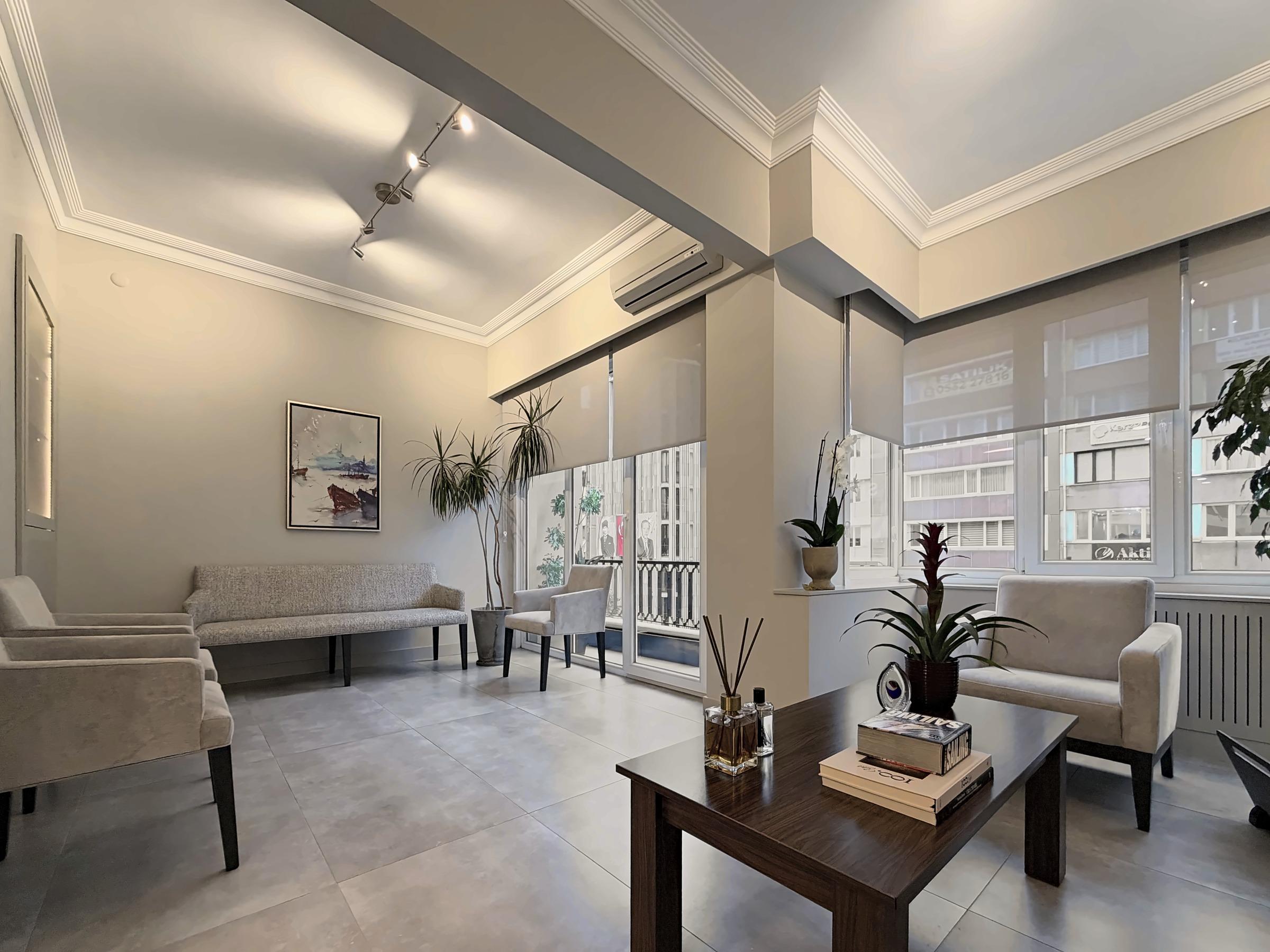
Dt. Mehmet Alp Erdem sees patients at two clinics. Dental Center Osmanbey is in Şişli, on Halaskargazi Avenue near Osmanbey metro station, which makes it easy to reach from central hotels and the main transport lines. Özel Dental Center is in Gaziosmanpaşa, on the European side of the city.
Both clinics have panoramic X-ray, CBCT and intraoral scanning, so imaging and planning can be done on the same day as your examination. Consultations can be held in English.
Flying after dental surgery
After a routine extraction or implant placement, most people can fly within a few days once bleeding has settled, although swelling often peaks around day two or three. Planning a check-up before departure is sensible so that any concern is addressed while you are still in Istanbul.
A sinus lift is different because air pressure changes in the cabin affect the sinuses. Patients are commonly advised to avoid flying for around 7-10 days after sinus surgery, and to avoid blowing the nose forcefully during healing. Your exact flight date should be agreed with Dt. Alp Erdem based on what was done and how healing is progressing.
Aftercare and follow-up when you are back home
Healing continues long after you leave Istanbul, so follow-up is planned from the start. You will receive written aftercare instructions, and you can send photos via WhatsApp during recovery for remote check-ins. Many questions, such as normal swelling or how a gum line is settling, can be answered this way.
We also recommend keeping a local dentist involved. Regular check-ups, cleaning and X-rays at home help detect problems early. On request, your records, imaging and treatment details can be shared so your local dentist knows exactly what was done. If something needs hands-on attention, it can be assessed locally or at your next visit.
What to bring and prepare
A little preparation makes the first appointment more productive and reduces the risk of last-minute changes to your plan.
- Recent X-rays or CBCT scans, ideally as digital files rather than printouts.
- A list of your medications, including blood thinners, osteoporosis medicines and supplements.
- Details of medical conditions such as diabetes, heart conditions or allergies.
- Any previous dental records, especially for existing implants, crowns or root canal treatment.
- Flexible return flights where possible, particularly for surgical treatment.
Why plan treatment in Istanbul with a surgery-led approach
Dt. Mehmet Alp Erdem is a dentist focused on oral surgery and implantology and a PhD candidate in Oral and Maxillofacial Surgery at Yeditepe University. Impacted teeth, implants, sinus lifts, bone grafting and jaw cysts form a large part of his daily work, alongside aesthetic dentistry.
The approach is plan first, treat last. Every case starts with 3D imaging and digital measurement, healthy tissue is preserved wherever possible, and measurable, where possible reversible, methods are preferred. For travelling patients, this means the number of trips and the healing time are discussed openly before treatment begins rather than compressed to fit a holiday.
How treatment works
- 01
Send your X-rays and photos
Share recent X-rays or a CBCT scan, photos and your main concerns via WhatsApp for a preliminary review.
- 02
Preliminary view and trip planning
You receive an outline of the likely treatment and how many trips and days it typically requires, so you can plan travel.
- 03
Examination and imaging in Istanbul
A clinical examination, panoramic and CBCT imaging and, where needed, an intraoral scan confirm what is actually needed.
- 04
Written treatment plan
You receive a written plan with the treatment sequence, appointment dates and costs before anything begins.
- 05
Treatment, check-up and follow-up
Treatment is carried out, checked before you fly, and followed up remotely via photos and with your local dentist.
Frequently asked questions
How many days do I need in Istanbul for dental implants?
Implants usually need two trips. The first, for examination, CBCT and implant placement, typically takes 7-10 days so the stitches can be checked and removed. After about 2-6 months of healing, the second trip for the final crowns typically takes 5-7 days. If a bone graft or sinus lift is needed first, the overall timeline is longer. Your exact schedule is confirmed after examination and CBCT imaging.
Can I fly after a sinus lift?
Patients are commonly advised to avoid flying for around 7-10 days after a sinus lift, because cabin pressure changes affect the sinuses during early healing. Avoiding forceful nose blowing and sneezing with the mouth closed also helps. The final decision on your flight date is made at a check-up based on how healing is progressing.
Is it safe to have dental treatment in Turkey?
Dental clinics in Turkey are licensed and inspected by the Turkish Ministry of Health. As anywhere, safety depends on the clinic and planning. Ask for a written treatment plan, check that 3D imaging is used for surgery, request documentation of the materials and implants used, and make sure follow-up is arranged before you travel.
Can I get a treatment plan before I travel?
You can send X-rays, a CBCT scan and photos via WhatsApp for a preliminary review, which gives an idea of the likely treatment and number of trips. A final written plan with costs is only given after an in-person examination and imaging in Istanbul, because some findings cannot be seen on photos or older X-rays.
Can veneers or crowns be done in one trip?
In most cases, yes. Veneers and crowns are usually completed in one trip of around 5-10 working days, covering preparation, digital scanning, laboratory work, try-in and fitting. Teeth with active decay, gum disease or root canal problems may need treatment first, which can extend the stay.
How long should I stay after wisdom tooth removal?
Planning around 4-7 days is typical. Swelling usually peaks on day two or three and then settles. A check-up before you leave allows the extraction site and any stitches to be reviewed. Most people can fly a few days after a routine extraction once bleeding has stopped.
Do you speak English?
Consultations can be held in English. If anything in your plan or aftercare instructions is unclear, ask during the consultation or send a message on WhatsApp before you travel home.
What happens if I have a problem after returning home?
You can send photos and describe symptoms via WhatsApp for a remote check-in, and many concerns can be answered this way. If hands-on care is needed, it can be assessed by your local dentist using the records provided, or at your next planned visit to Istanbul.
Which clinic in Istanbul will I be treated at?
Dt. Mehmet Alp Erdem sees patients at Dental Center Osmanbey in Şişli, near Osmanbey metro station, and at Özel Dental Center in Gaziosmanpaşa. The location is agreed when your appointments are planned, usually based on where you are staying.
Treatments
- Dental Implants in Istanbul
- All-on-4 & Full Mouth Dental Implants in Istanbul
- Zygomatic Implants in Istanbul
- Sinus Lift in Istanbul
- Dental Bone Grafting in Istanbul
- Wisdom Tooth Removal in Istanbul
- Jaw Cyst Surgery in Istanbul
- Smile Design (Hollywood Smile)
- Porcelain Veneers
- Zirconia Crowns
- Composite Bonding
- Gum Contouring and Crown Lengthening
- Teeth Whitening in Istanbul
- Gum Disease Treatment in Istanbul
- Root Canal Treatment in Istanbul
This page is for general information. Diagnosis and treatment decisions are made by the dentist after examination and imaging.