Implants
All-on-4 & Full Mouth Dental Implants in Istanbul
Medically reviewed by Dt. Mehmet Alp Erdem·Last updated:

What are full mouth dental implants?
Instead of placing an implant for every missing tooth, a full-arch approach uses a small number of strategically positioned implants — usually four to six — to support a single fixed bridge carrying 10-14 teeth. The bridge is screwed onto the implants, so you do not take it out; your dentist can remove it for maintenance.
In the All-on-4 concept, the two front implants are placed upright and the two back implants are tilted. Angling the back implants lets them follow a longer stretch of bone while avoiding the sinus in the upper jaw and the nerve canal in the lower jaw, which can reduce the need for bone grafting in some patients. All-on-6 spreads the load across more implants; which suits you depends on bone volume and bite forces.
Who is suitable for full-arch implants?
Full-arch treatment is typically considered for people who have lost all their teeth in one or both jaws, who find dentures loose or uncomfortable, or whose remaining teeth are failing because of advanced gum disease or extensive decay. In that last case, extractions and implant placement are often planned in the same session.
If your own teeth can be predictably saved, keeping them comes first. Full-arch implants are a carefully chosen option, not a default. Key factors at assessment include:
- Jawbone volume and density, measured on a CBCT scan
- Smoking, diabetes and medications that affect healing
- Teeth grinding or clenching
- Smile line, lip support and facial proportions
- Your ability to clean under a fixed bridge every day
Planning from the smile back to the bone
Every case starts with a panoramic X-ray and a 3D cone-beam CT scan. Dt. Mehmet Alp Erdem, a dentist focused on oral surgery and implantology, then uses intraoral scans and photographs to design where the new teeth should sit, and plans implant positions around that design rather than wherever bone happens to be available.
This tooth-first planning aims for a bridge that looks natural and can actually be cleaned. Where bone is lacking, a sinus lift, bone grafting or — in severe upper-jaw bone loss — zygomatic implants may be built into the plan. Your written treatment plan, provided after examination, sets out what drives the cost: the number of arches and implants, any additional surgery, and the temporary and final bridge materials.
Can I get teeth in a day?
When the bone is good and the implants reach sufficient stability during surgery, a fixed temporary bridge can usually be attached within a few days, so you are not left without teeth while healing. This depends on measurements taken during surgery and is not possible for everyone.
If stability is too low, the implants are left to heal first and a removable temporary is worn.
The temporary bridge is lighter and slightly more flexible, so a soft diet is advised for the first 6-8 weeks. Once the implants have integrated — typically after 3-6 months — the final, stronger bridge is made and fitted.
Risks and recovery
Swelling, bruising and tenderness are expected for the first several days, and most people return to desk work within a few days. Less common issues include implant failure, infection, fracture of the temporary bridge and temporary changes in speech while you adapt. If one implant does not integrate, treatment can often continue with a replacement.
The main long-term risk is peri-implantitis — inflammation of the tissues around an implant. Because food can collect under the bridge, a water flosser and interdental brushes are usually recommended alongside normal brushing.
Aftercare and alternatives
With good home care and regular reviews, a full-arch bridge can serve you well for many years. At check-ups once or twice a year, the bridge may be removed so the implants and gums can be assessed and screws checked. If you grind your teeth, a night guard may be advised.
Compared with a conventional denture, a fixed bridge does not cover the palate and does not move when you chew. An implant-retained overdenture — a removable denture that clips onto two to four implants — uses fewer implants and is easier to clean, and can be a sensible alternative. The options are discussed at your consultation.
How treatment works
- 01
Consultation, CBCT and digital smile design
Bone, sinus and nerve positions are assessed in 3D, and tooth positions are designed digitally from scans and photographs.
- 02
Written treatment plan
All-on-4, All-on-6 or another option is recommended, with any extra surgery and each stage set out in writing.
- 03
Extractions and implant surgery
Remaining failing teeth are removed and the implants placed, usually in one session under local anaesthetic, with sedation if needed.
- 04
Fixed temporary bridge
In suitable cases a fixed temporary bridge is attached within a few days, and healing is checked before you fly home.
- 05
Final bridge
After typically 3-6 months of healing, impressions and try-ins are taken and the final bridge is screwed into place.
Travelling to Istanbul for full mouth implants
Full-arch treatment is usually completed in two trips. The first, of around 7-10 days, includes the consultation and CBCT scan, any extractions, implant surgery and fitting of a fixed temporary bridge. Before you leave, healing and the bridge are checked. Plan for a soft diet and some swelling during this stay.
The second trip takes place after typically 3-6 months of healing and lasts around 7-10 days to allow for impressions, try-ins and fitting the final bridge. In between, you can send photos and questions by WhatsApp, and your local dentist can carry out routine checks using the written summary you are given.
To plan ahead, send any existing panoramic X-ray or CBCT scan by WhatsApp for a preliminary review. Treatment takes place at clinics in Şişli (Osmanbey) and Gaziosmanpaşa, and the final plan is confirmed in writing after your in-person examination.
| Stage | Where | Typical length |
|---|---|---|
| Trip 1: consultation, CBCT, extractions, implant surgery, fixed temporary bridge | Istanbul | About 7-10 days |
| Healing (implants fuse with bone) | At home | Typically 3-6 months |
| Trip 2: impressions, try-ins, final bridge | Istanbul | About 7-10 days |
Frequently asked questions
How many trips to Istanbul do full mouth implants need?
Usually two. The first trip of about 7-10 days covers the consultation, scan, extractions, implant surgery and a fixed temporary bridge. After 3-6 months of healing at home, a second trip of about 7-10 days is used for impressions, try-ins and fitting the final bridge. Extra grafting can add time.
What is the difference between All-on-4 and All-on-6?
Both replace a full arch with a fixed bridge screwed onto implants. All-on-4 uses four implants, often with the back two tilted to avoid the sinus or nerve; All-on-6 uses six, spreading the load across more points. The choice depends on bone volume and quality, bite forces and the jaw being treated.
Will I leave Istanbul with teeth?
In most suitable cases, yes — a fixed temporary bridge is attached within a few days of surgery, before you fly home. This depends on implant stability measured during surgery. If stability is insufficient, the implants are left to heal and a removable temporary denture is used instead.
Can I fly home after full-arch implant surgery?
Most patients fly home around a week after surgery, once stitches and the temporary bridge have been checked. If a sinus lift was performed, waiting about 7-10 days and avoiding nose-blowing is usually advised. Swelling is often still visible for the first few days, so plan your return accordingly.
Is the bridge removable?
Not by you. A full-arch implant bridge is screwed onto the implants and stays in place; only your dentist removes it for check-ups, cleaning or repairs. This is different from an implant-retained overdenture, which you unclip and clean outside the mouth.
What if I don't have enough bone for All-on-4?
Tilted implants often make use of the available bone, but where bone loss is advanced, options include a sinus lift, bone grafting or, in severe upper-jaw bone loss, zygomatic implants anchored in the cheekbone. A CBCT scan is essential to decide which option is appropriate and safe.
What determines the cost of full mouth implants?
Cost depends on whether one or both arches are treated, the number of implants per arch, any sinus lift or grafting, sedation, and the materials of the temporary and final bridges. An accurate plan is only possible after examination and a 3D scan; you then receive a written plan covering every stage.
How do I clean a full-arch implant bridge?
Brush twice a day as you would natural teeth, and clean under the bridge with a water flosser, interdental brushes or special floss. Professional reviews once or twice a year allow the bridge to be removed if needed and the implants checked. Any dentist familiar with implants can provide this care back home.
Guides
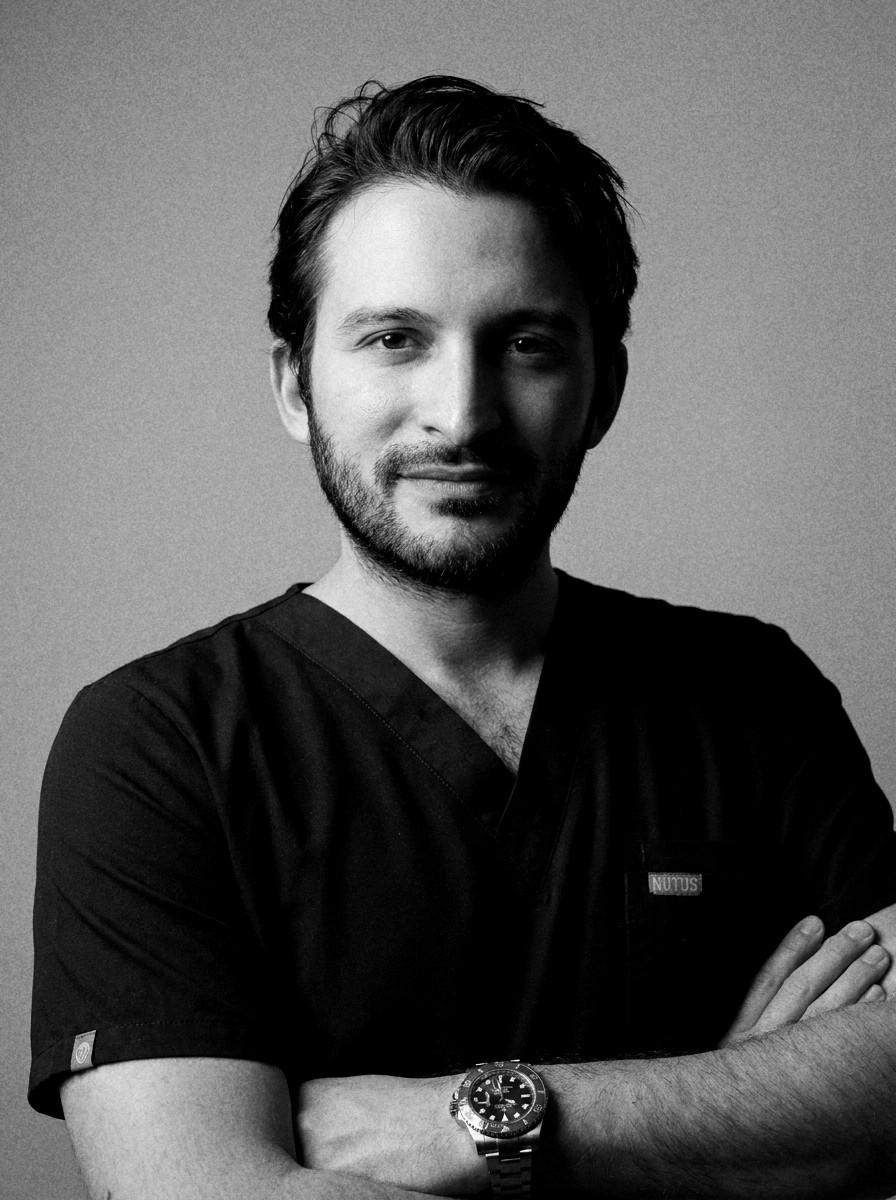
Written and reviewed by
Dt. Mehmet Alp ErdemDentist · PhD candidate in Oral and Maxillofacial Surgery, Yeditepe University
Sources
This page is for general information. Diagnosis and treatment decisions are made by the dentist after examination and imaging.
Plan your consultation
If you already have X-rays or a CBCT scan, send them on WhatsApp for a preliminary review before you travel.
Related treatments

Dental Implants in Istanbul
A titanium or zirconia root placed in the jawbone to replace a missing tooth — planning, healing time, trips to Istanbul and aftercare.
Details
Zygomatic Implants in Istanbul
Long implants anchored in the cheekbone for severe upper-jaw bone loss — who is a candidate, alternatives, risks and travel planning.
Details
Sinus Lift in Istanbul
Rebuilding bone height under the sinus so upper back teeth can be replaced with implants — lateral vs crestal, healing and flying.
Details
Dental Bone Grafting in Istanbul
Rebuilding lost jawbone so implants have a stable foundation — graft types, when grafting is needed, healing time and trips to Istanbul.
Details