Implants
Sinus Lift in Istanbul
Medically reviewed by Dt. Mehmet Alp Erdem·Last updated:

What is a sinus lift and why is it needed?
The maxillary sinuses are air-filled spaces sitting just above the roots of the upper back teeth. After those teeth are lost, the jawbone gradually resorbs and the sinus tends to expand downwards into the space. The result is often too little bone height to hold an implant where the molar used to be.
In a sinus lift, the thin membrane lining the sinus floor (the Schneiderian membrane) is carefully lifted without tearing it, and bone graft material is placed in the space created. Over the following months the graft is gradually replaced by your own bone, giving an implant the height it needs. Only a small lower portion of the sinus is used, and normal sinus function is not affected.
Open (lateral) vs closed (crestal) sinus lift
The main factor in choosing the approach is how much bone remains between the gum and the sinus floor. Current evidence-based decision guides also consider membrane thickness, the sinus wall and any internal septa. A closed lift is typically used when around 5 mm or more of bone remains; an open lift when less remains.
- Closed (crestal) sinus lift: typically used when around 5 mm or more of bone remains. The sinus floor is gently tapped upwards a few millimetres through the implant site, and the implant is usually placed at the same time. It is less invasive and recovery is quicker.
- Open (lateral) sinus lift: used when very little bone remains (typically under about 4-5 mm). A small window is made in the side wall of the sinus, the membrane is lifted under direct vision and more graft is placed. The implant goes in at the same time if it can be stabilised, otherwise after typically 4-9 months.
| Closed (crestal) | Open (lateral) | |
|---|---|---|
| Remaining bone | Around 5 mm or more | Under about 4-5 mm |
| Access | Through the implant site | Small window in the sinus side wall |
| Amount of graft | Less | More |
| Implant timing | Usually same session | Same session if stable, otherwise after 4-9 months |
| Recovery | Quicker, less invasive | Longer than closed |
Who needs a sinus lift — and who may not be suitable?
A sinus lift is most often needed when implants are planned for the upper premolar or molar area in someone who lost those teeth years ago, or who has had bone loss from advanced gum disease. Sinus disease, poorly controlled diabetes and heavy smoking may change the plan.
How far the sinus drops after an extraction varies a great deal between people, so two patients who lost the same tooth at the same time may need very different treatment.
Untreated chronic sinusitis, cysts or polyps in the sinus, poorly controlled diabetes and heavy smoking may mean the procedure is postponed or a different plan is chosen. Where upper-jaw bone loss is very advanced, options such as zygomatic implants may also be considered for fixed teeth.
Planning: no decision without a 3D scan
Dt. Mehmet Alp Erdem, a PhD candidate in Oral and Maxillofacial Surgery at Yeditepe University, plans every sinus procedure on a 3D cone-beam CT scan. It shows remaining bone height, membrane thickness, any septa or signs of inflammation inside the sinus, and the blood vessels in the side wall.
If there is an active sinus infection, cyst or chronic sinusitis, that needs treating first, sometimes with input from an ear, nose and throat doctor. In some cases short or tilted implants can avoid the need for a sinus lift altogether. The aim is to create a reliable foundation for the implant with the least intervention. Your written plan sets out each stage and what determines the cost.
Recovery and aftercare
For the first few days, cheek swelling, mild bruising and a little blood-tinged discharge from the nose on that side are normal. Discomfort is usually mild to moderate and controlled with prescribed medication; antibiotics and a nasal decongestant may be given depending on the case.
To protect the graft, avoid anything that raises sinus pressure for the first 10-14 days:
- Don't blow your nose forcefully; sneeze with your mouth open
- No straws and no smoking
- Postpone strenuous exercise, diving and flying for the first days
- Chew on the other side and stick to soft, lukewarm food
Risks and possible complications
The most common event is a small perforation of the sinus membrane during surgery. Small tears are usually repaired on the spot with a protective membrane and the procedure continues; larger ones may mean the graft is placed a few months later. Less commonly, sinusitis, graft infection, nosebleeds or partial loss of the graft can occur.
Careful CBCT planning and checking sinus health beforehand help reduce these risks. Contact the clinic if you notice increasing pain, fever, foul-smelling nasal discharge or graft granules coming into your mouth in the days after surgery.
How treatment works
- 01
Examination and CBCT
Remaining bone height, the sinus membrane and overall sinus health are assessed in 3D.
- 02
Choosing the approach and written plan
Crestal or lateral approach is chosen, and whether the implant is placed at the same time is decided.
- 03
Sinus lift
Under local anaesthetic the membrane is raised and bone graft placed; the implant is added in the same session if suitable.
- 04
Healing and reviews
Avoid sinus pressure for 10-14 days; stitches come out after 7-14 days. The graft typically matures over 4-9 months.
- 05
Implant and crown
Once the graft has matured, the implant is placed — or, if it was placed at the same time, the crown is fitted.
Travelling to Istanbul for a sinus lift
Because of the flying restriction, plan to stay in Istanbul for at least 7-10 days after a sinus lift. That allows stitches to be removed, the sinus area to be checked and you to be cleared to fly. Avoid booking a return flight before your review appointment.
If implants are placed during the same surgery, the next trip is for the crowns once the implants have integrated. If the graft needs to mature first, a second trip is planned after about 4-9 months to place the implants, followed by a short visit for the crowns. Between visits you can share questions and photos by WhatsApp.
Before travelling, send any existing CBCT scan by WhatsApp for a preliminary review; it often shows whether a crestal or lateral lift is likely. The final plan is confirmed in writing after your examination at the clinics in Şişli (Osmanbey) or Gaziosmanpaşa.
Frequently asked questions
How long after a sinus lift can I fly?
Cabin pressure changes can stress the healing sinus membrane, so flying is generally advised around 7-10 days after surgery, once you have had a post-operative check. After a closed (crestal) lift this can sometimes be shorter. Your fly-home date is confirmed at the review appointment.
Is a sinus lift painful?
It is done under local anaesthetic, so you should feel pressure rather than pain during the procedure. Afterwards, mild to moderate soreness, cheek swelling and bruising for two to four days are common and usually well controlled with prescribed medication. Recovery after a crestal lift tends to be easier.
What is the difference between an open and a closed sinus lift?
A closed (crestal) lift raises the sinus floor through the implant site and suits cases with roughly 5 mm or more of remaining bone. An open (lateral) lift uses a small window in the side of the sinus to add more graft and is used when very little bone remains. The choice is based on CBCT measurements.
How long after a sinus lift can I get implants?
If there is enough bone to stabilise the implant, it is placed during the same surgery. If not, the graft is left to mature first and the implant is usually placed after about 4-9 months. Either way, the crown is fitted once the implant has fused with the bone.
How many trips to Istanbul does a sinus lift need?
If the implant is placed during the sinus lift, usually two trips: surgery (staying 7-10 days) and a later visit for the crown. If the graft must mature first, a third short trip may be needed — one for the lift, one for the implant 4-9 months later, and one for the crown.
What happens if the sinus membrane tears?
A small tear is the most common intra-operative event and is usually repaired immediately with a protective membrane so the procedure can continue. With a larger tear, grafting may be postponed for a few months while the membrane heals. In most cases this does not cause long-term problems.
Does every upper implant need a sinus lift?
No. A sinus lift is only needed in the upper back jaw when the distance between the bone crest and the sinus floor is too small for an implant. Short or tilted implants can sometimes avoid it. Your CBCT scan determines whether it is necessary.
What determines the cost of a sinus lift?
The main factors are the approach (crestal or lateral), the amount of graft and membrane material, whether one or both sides are treated, and whether implants are placed in the same session. A precise plan is given in writing after examination and a 3D scan.
Guides
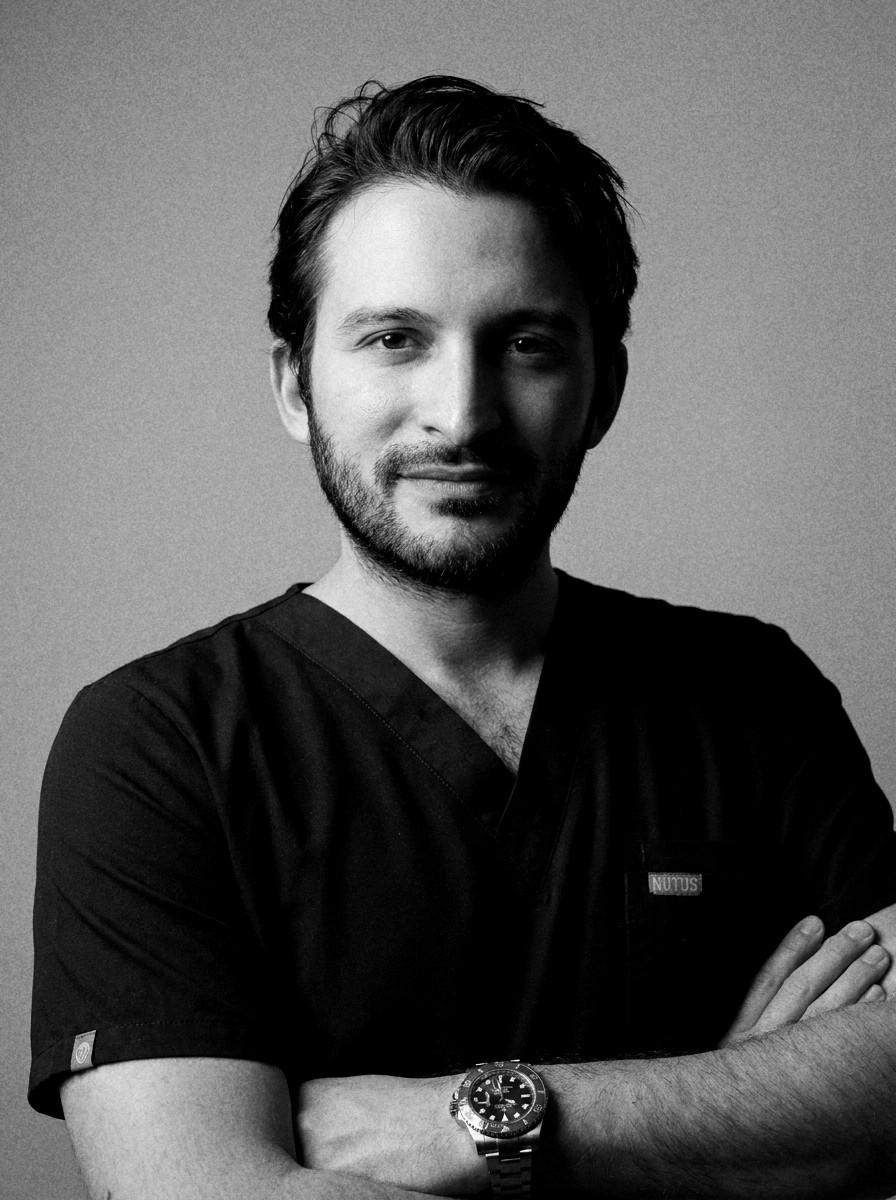
Written and reviewed by
Dt. Mehmet Alp ErdemDentist · PhD candidate in Oral and Maxillofacial Surgery, Yeditepe University
Sources
This page is for general information. Diagnosis and treatment decisions are made by the dentist after examination and imaging.
Plan your consultation
If you already have X-rays or a CBCT scan, send them on WhatsApp for a preliminary review before you travel.
Related treatments

Dental Implants in Istanbul
A titanium or zirconia root placed in the jawbone to replace a missing tooth — planning, healing time, trips to Istanbul and aftercare.
Details
Dental Bone Grafting in Istanbul
Rebuilding lost jawbone so implants have a stable foundation — graft types, when grafting is needed, healing time and trips to Istanbul.
Details
Zygomatic Implants in Istanbul
Long implants anchored in the cheekbone for severe upper-jaw bone loss — who is a candidate, alternatives, risks and travel planning.
Details
All-on-4 & Full Mouth Dental Implants in Istanbul
A fixed full-arch bridge on 4-6 implants for people with no teeth or failing teeth — candidacy, timeline, trips to Istanbul and aftercare.
Details