Oral surgery
Wisdom Tooth Removal in Istanbul
Medically reviewed by Dt. Mehmet Alp Erdem·Last updated:

What is an impacted wisdom tooth?
Wisdom teeth are the third molars at the very back of the mouth, and they usually appear between the ages of 17 and 25. When the jaw lacks room, a wisdom tooth can grow at an angle, stay trapped in the bone or break only partly through the gum. Dentists call this an impacted wisdom tooth.
Impaction is most common in the lower jaw. A fully buried tooth that sits quietly can be harmless for years, while a partly erupted tooth leaves a flap of gum that traps food and bacteria. That pocket is behind pericoronitis, the gum infection that causes most wisdom tooth pain. The question is never just whether a tooth is impacted, but whether it is causing damage or is likely to.
When do wisdom teeth need to come out?
Mainstream guidance, including the NHS and the American Dental Association, does not recommend removing healthy wisdom teeth that cause no symptoms as a matter of routine. A tooth that is fully buried and shows no changes can often be monitored with regular check-ups. Removal is usually advised when there is a clear clinical reason, such as:
- Repeated infection of the gum around the tooth (pericoronitis)
- Decay in the wisdom tooth or in the second molar in front of it
- Resorption or bone loss on the neighbouring tooth
- A cyst, most often a dentigerous cyst, around the crown of the tooth
- Orthodontic, restorative or surgical plans that need the space
How surgery is planned
Dt. Mehmet Alp Erdem starts every case with a panoramic X-ray. If a lower wisdom tooth's roots appear close to the inferior alveolar nerve, a 3D cone beam CT (CBCT) scan is taken to show their exact relationship, the bone thickness and the tooth's angle.
Dt. Erdem is a dentist focused on oral surgery and a PhD candidate in Oral and Maxillofacial Surgery at Yeditepe University.
With that information, the incision, the amount of bone to remove and how to section the tooth are decided before the appointment rather than during it. Dividing the tooth into smaller pieces often allows it to be lifted out through a smaller opening, which helps limit swelling and protects the surrounding bone.
You receive a written plan explaining whether removal is needed, what will be done and what recovery to expect. Let us know about any blood thinners, heart conditions, diabetes or recent medication changes, as these shape the plan and the aftercare.
Alternatives to full removal
Monitoring is a valid choice for a buried tooth that causes no symptoms and shows no changes on X-ray; a check-up image every one to two years is typical. If infection, decay or a cyst appears later, removal can be planned at that point, which is why regular reviews matter.
Where the roots are wrapped closely around the nerve, a coronectomy may be considered: the crown is removed and the roots are deliberately left in place to reduce the risk of nerve injury. It is not suitable for every tooth, for example one with infection around the roots. For impacted teeth that have a job to do, such as an upper canine, surgical exposure combined with orthodontic treatment may be preferable to extraction.
Risks and recovery
Swelling, some bleeding, a stiff jaw and soreness are expected for the first two or three days, and most people manage well with the recommended painkillers. Swelling usually peaks on day two or three and then settles; within about a week most normal activities are back on track.
Dry socket, where the blood clot is lost too early, shows up as increasing pain a few days after surgery and is treated simply with a medicated dressing. Smoking raises the risk considerably. Numbness of the lip, chin or tongue is uncommon and usually temporary; CBCT planning exists precisely to assess this risk beforehand.
- Do not rinse or use a straw for the first 24 hours
- Use a cold pack on day one, then warm salt-water rinses
- Avoid smoking for at least 48-72 hours
- Choose soft, lukewarm food and chew on the other side for a few days
- Take medication as advised and skip strenuous exercise for about a week
Healing and long-term care
The gum usually closes over in two to three weeks, while the bone in the socket fills in over the following months. Younger patients tend to heal faster, which is one reason a tooth that is clearly heading for trouble is sometimes better removed earlier rather than later.
Removing a problem wisdom tooth also makes the back of the second molar much easier to clean. Flossing or using interdental brushes in that area and keeping up regular check-ups and hygiene visits help the neighbouring tooth stay healthy for the long term.
| Time | What to expect |
|---|---|
| First 24 hours | No rinsing or straws; cold pack |
| Days 2-3 | Swelling peaks, then settles; most return to desk work |
| About 1 week | Most normal activities back; strenuous exercise can resume |
| 2-3 weeks | Gum closes over |
| Following months | Bone fills in the socket |
How treatment works
- 01
Assessment and imaging
A panoramic X-ray is taken, with a 3D CBCT scan when the roots lie close to the nerve.
- 02
Written plan
Whether removal is needed, the alternatives, the risks and the expected recovery are explained in writing.
- 03
Surgery
Under local anaesthetic, the tooth is removed, sectioned if needed, with minimal bone removal; the area is stitched.
- 04
Review
A check after about a week confirms healing; stitches are removed if they are not dissolvable.
Travelling to Istanbul for wisdom tooth removal
You can send an existing panoramic X-ray or CBCT scan via WhatsApp before you book flights. A preliminary review gives you a realistic idea of whether removal looks necessary and how many teeth are involved; the final decision is made after the in-person examination.
One trip is usually enough. The consultation and surgery can often take place on the same or the following day, and planning around five to seven days in Istanbul allows a review appointment before you fly. With dissolvable stitches there is nothing to remove later, and any further check can be done by your own dentist at home.
Frequently asked questions
How long does wisdom tooth removal take?
Most single wisdom tooth extractions take 20 to 60 minutes, depending on how deeply the tooth sits, its angle and the shape of its roots. Simple upper wisdom teeth can be quicker; deeply impacted lower teeth take longer. You are given an estimate after the X-ray and CBCT review.
Does wisdom tooth removal hurt?
The area is fully numbed with local anaesthetic, so you should feel pressure but not sharp pain during surgery. Once the numbness wears off, soreness and swelling for two to three days are normal, and most people manage this comfortably with the painkillers recommended after the procedure.
Should I have my wisdom teeth removed if they don't hurt?
Not necessarily. Guidance from the NHS and the ADA is that healthy wisdom teeth without symptoms can often be kept and monitored. Removal makes more sense if X-rays show decay, damage to the neighbouring molar or a cyst, or if a partly erupted tooth keeps getting infected.
Can all four wisdom teeth be removed at once?
Often, yes, if your general health and the position of the teeth allow it. Some people prefer to have one side done at a time so they can chew on the other side. The number of appointments is agreed after examination, taking your travel plans into account.
When can I fly after wisdom tooth removal?
Most people can fly within a few days of an uncomplicated extraction. Because swelling peaks around day two or three and dry socket tends to appear in the first week, staying around five to seven days in Istanbul allows a review before a long-haul flight.
What is dry socket and how can I avoid it?
Dry socket is increasing pain that starts a few days after an extraction, when the protective blood clot is lost too early. Not smoking, avoiding straws and vigorous rinsing on the first day, and following the aftercare instructions lower the risk. If it happens, a medicated dressing usually settles it quickly.
Can wisdom tooth surgery damage the nerve?
Lower wisdom teeth can sit close to the nerve that supplies feeling to the lip and chin, so temporary numbness is a recognised but uncommon risk; lasting changes are rare. A 3D CBCT scan helps assess this beforehand, and where the risk is high a coronectomy may be discussed.
What affects the cost of wisdom tooth removal in Istanbul?
The depth and angle of the tooth, its root shape, whether a CBCT scan is needed and how many teeth are treated in one session all affect the plan. After examination and imaging you receive a written treatment plan that includes the costs.
Guides
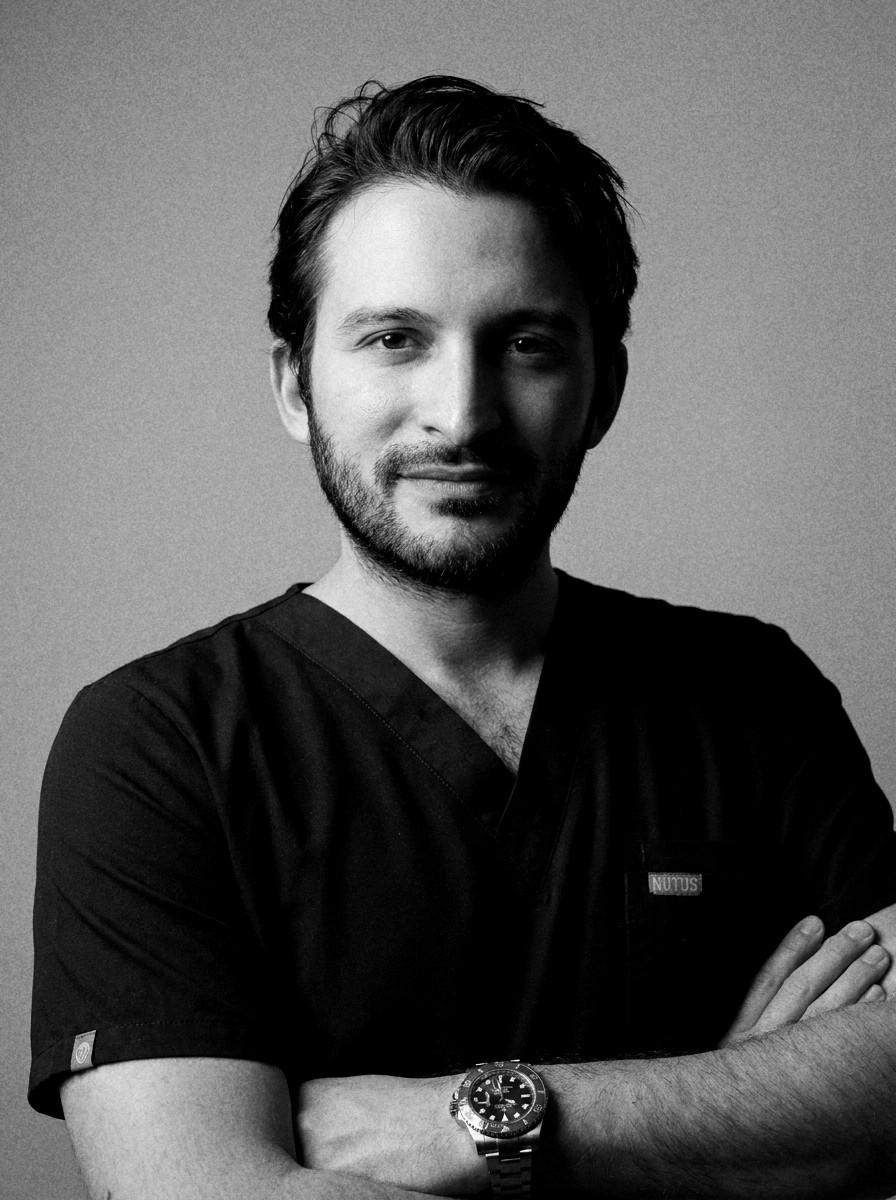
Written and reviewed by
Dt. Mehmet Alp ErdemDentist · PhD candidate in Oral and Maxillofacial Surgery, Yeditepe University
This page is for general information. Diagnosis and treatment decisions are made by the dentist after examination and imaging.
Plan your consultation
If you already have X-rays or a CBCT scan, send them on WhatsApp for a preliminary review before you travel.
Related treatments

Jaw Cyst Surgery in Istanbul
Planned removal of benign jaw cysts, with 3D CBCT diagnosis, laboratory analysis of the tissue and structured follow-up.
Details
Dental Bone Grafting in Istanbul
Rebuilding lost jawbone so implants have a stable foundation — graft types, when grafting is needed, healing time and trips to Istanbul.
Details
Dental Implants in Istanbul
A titanium or zirconia root placed in the jawbone to replace a missing tooth — planning, healing time, trips to Istanbul and aftercare.
Details